01 Explore Ladakh
Explore Ladakh is a travel and tourism website for a Ladakh-based agency specialising in curated tours, treks, and experiences across the region — redesigned to better reflect the raw beauty and spirit of the destination.
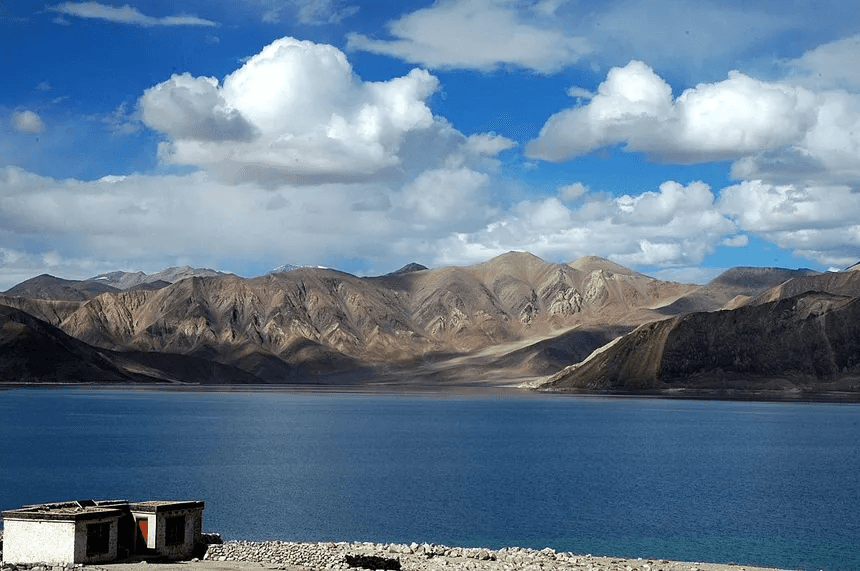
problem statement
The existing site had everything — packages, destinations, contact details. But the visual clutter, double navigation, and tight photography meant users couldn't feel the place before they were asked to book it.
Ladakh sells itself to anyone who's seen a photograph of it. The site just wasn't letting it.
process overview
Explore Ladakh was redesigned end-to-end following the Design Thinking framework — beginning with a genuine understanding of who travels to Ladakh and why, before touching a single screen.

existing website
/ what wasn't working
Before jumping into redesign, I spent time genuinely understanding the existing site —
not to find fault, but to understand what it was trying to do and where the experience was falling short for users.
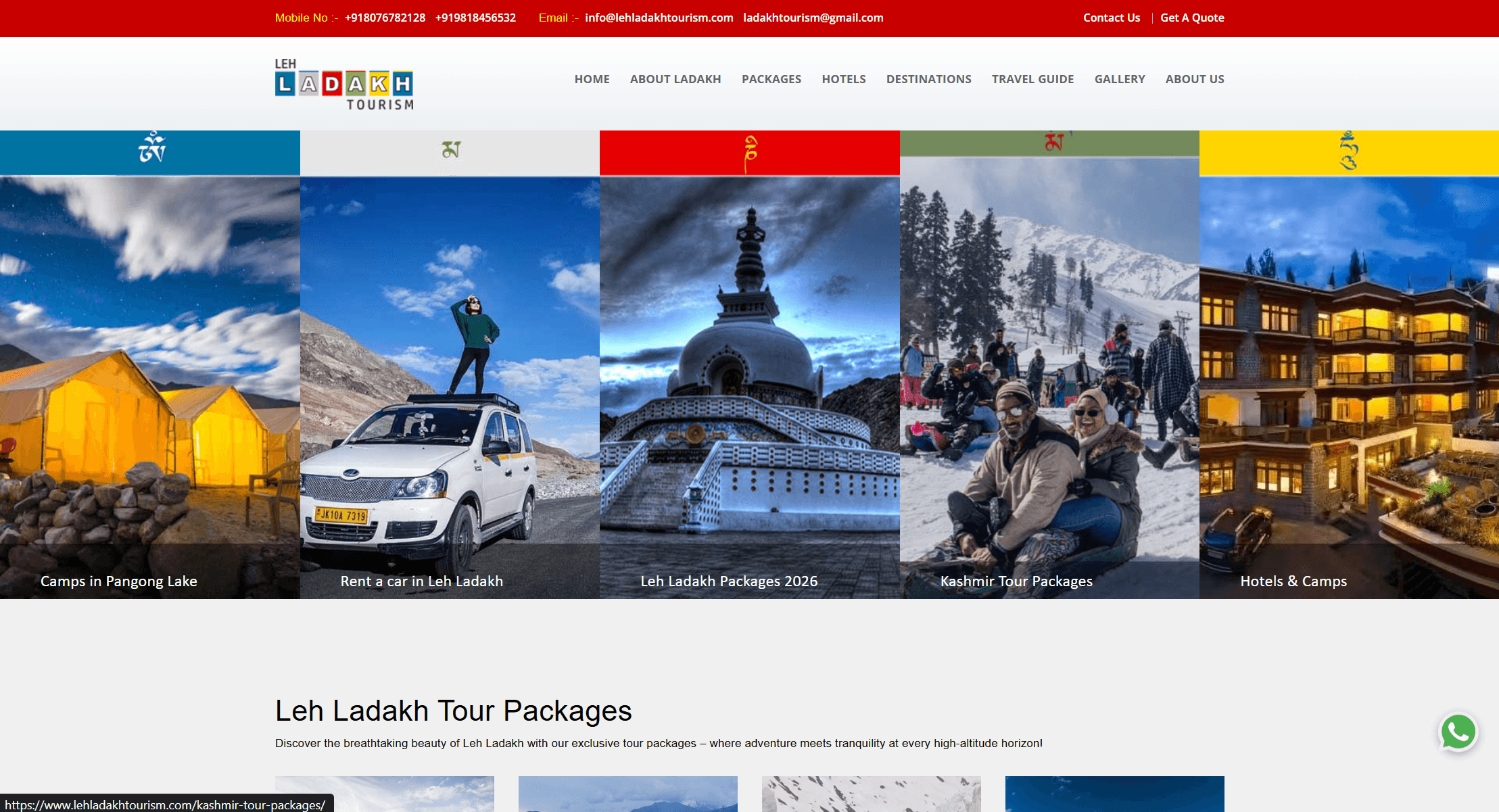
The site had clearly been built to communicate a lot of information: packages, destinations, contact details, travel guides. The intent was thorough. But over time, the accumulation of content without a consistent visual system had made it harder for users to find what they were looking for — or to feel the pull of the destination itself.
Visual identity
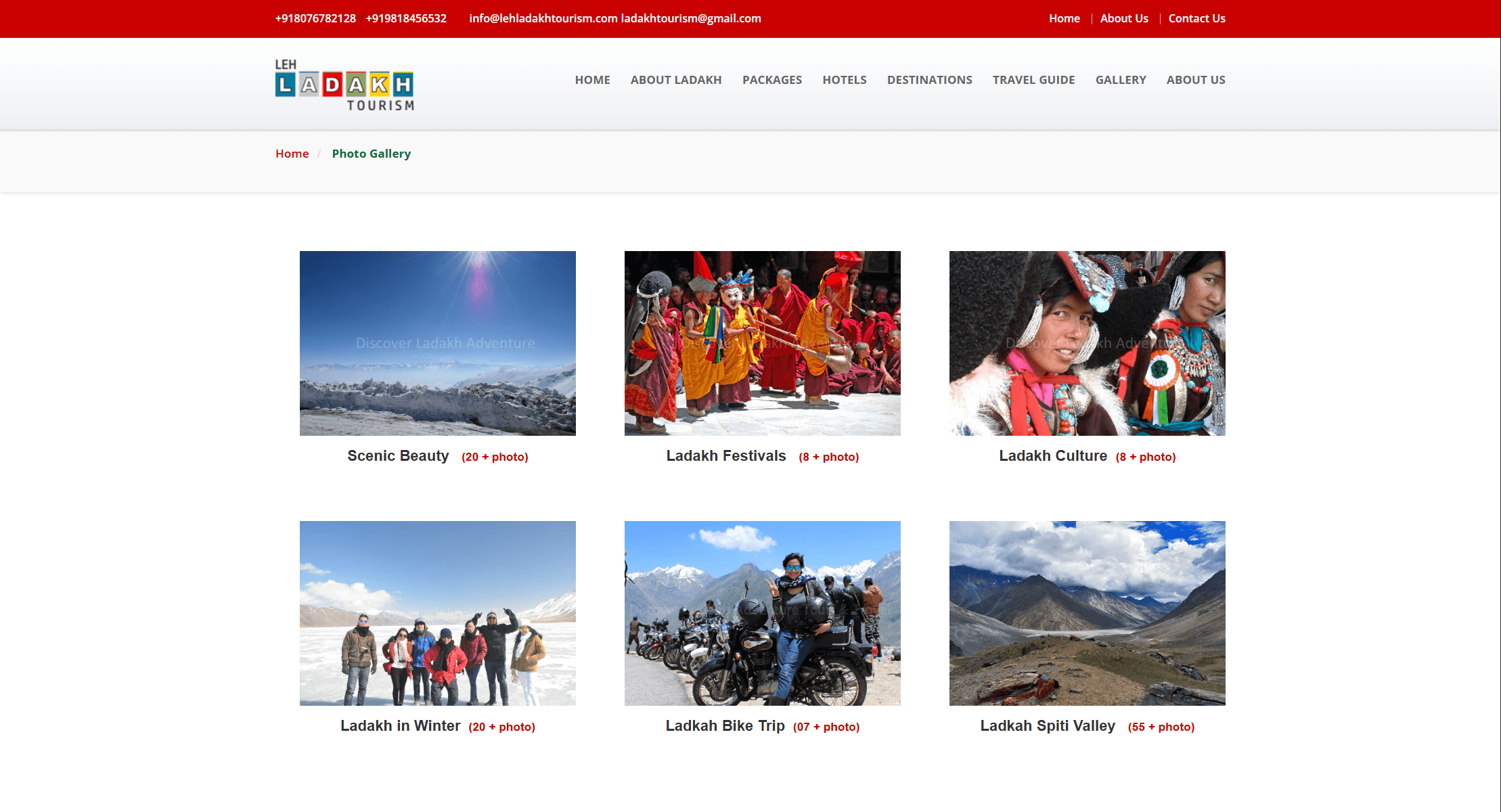
The site leaned on a red-and-white template aesthetic that, while functional, didn't carry a sense of place. Ladakh has an extraordinarily distinct character — high altitude, raw landscapes, deep cultural history. The visual design hadn't yet found a way to reflect that, which meant the site wasn't using one of its strongest assets: the destination itself.
Photography
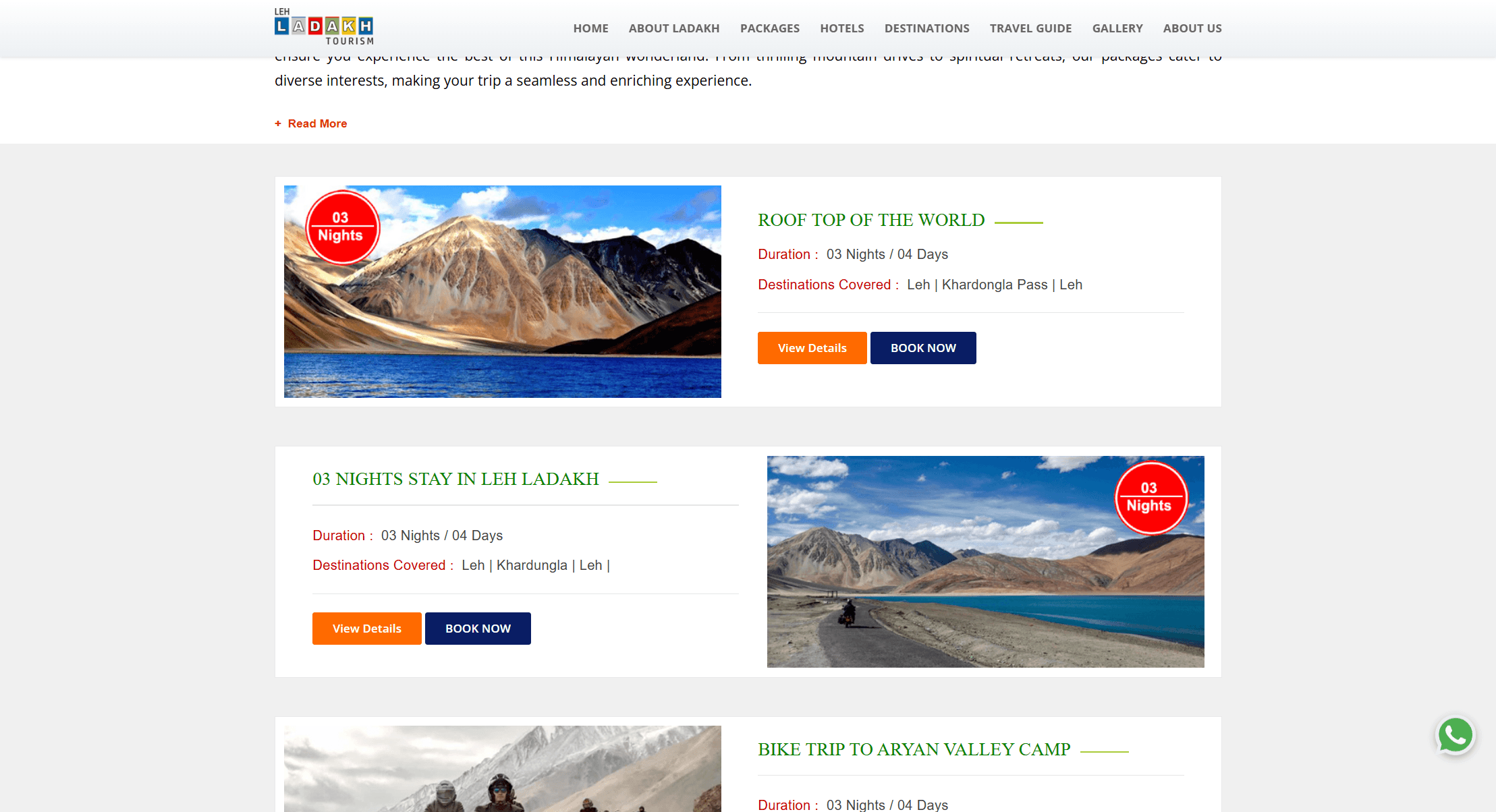
Images were present throughout the site but were often displayed small and tightly cropped. Given that most travellers make emotionally-driven decisions — they need to feel a place before they book it — there was a significant opportunity to let the photography do more of the selling.
Navigation
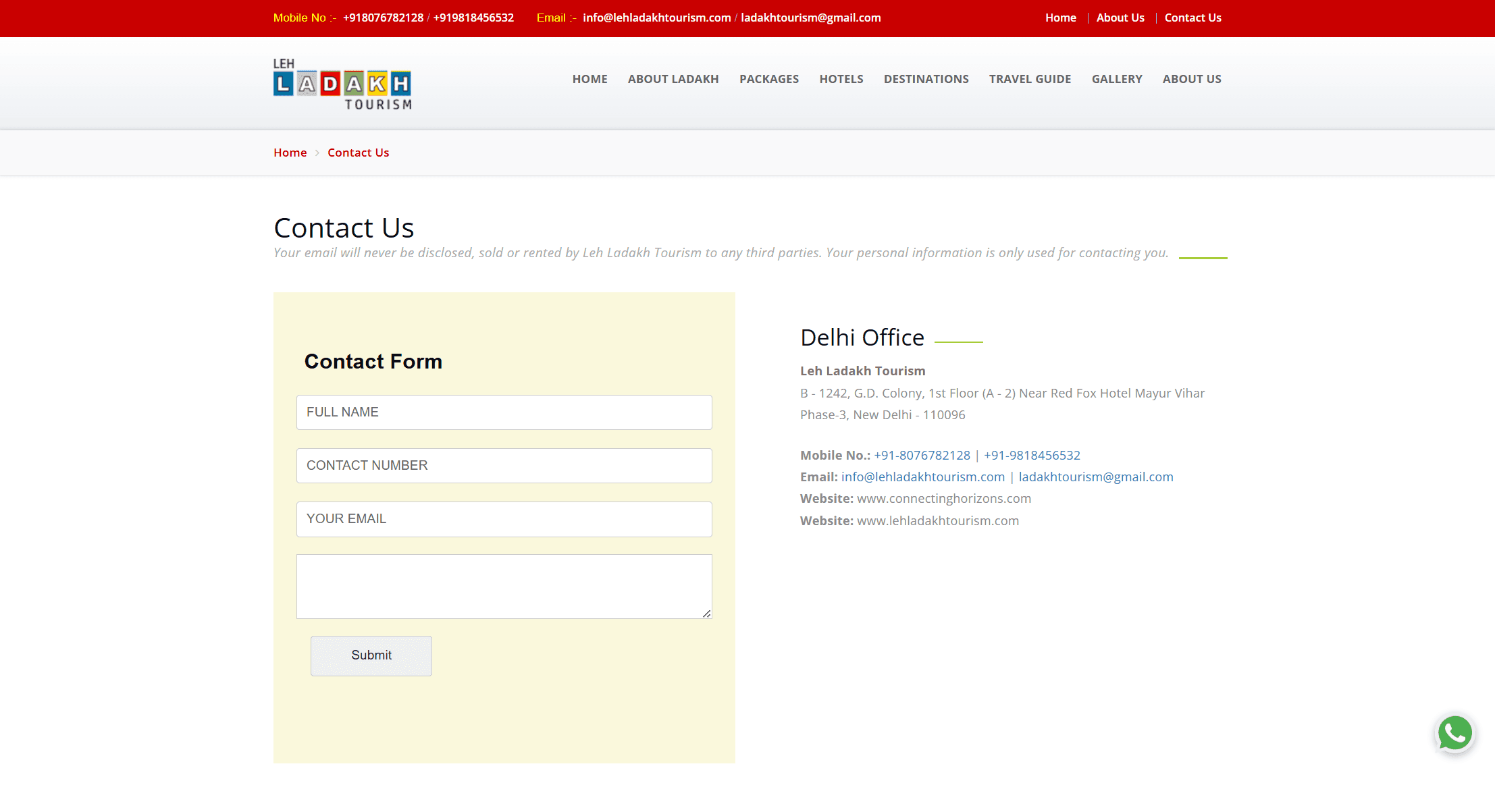
The header carried two layers of navigation simultaneously: a primary nav and a secondary utility bar for contact details and CTAs. For a first-time visitor trying to orient themselves, this created a lot of competing information before they'd engaged with any content.
Typography and hierarchy
Without a clear typographic system, it was difficult to distinguish between primary information, secondary context, and supporting detail. Body text was set small in places, which added friction for users reading on desktop.
Page density
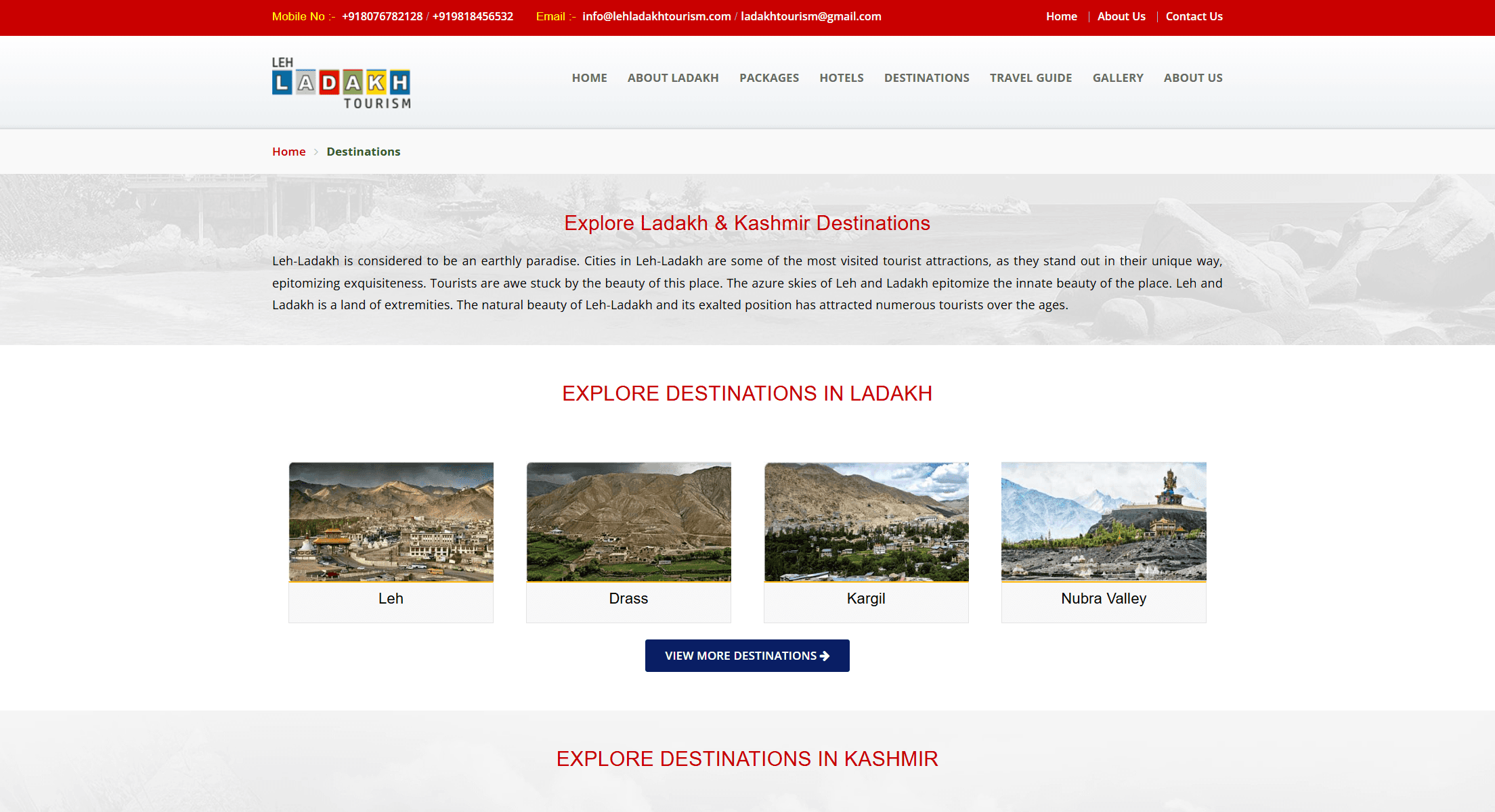
Several pages packed a lot of content into tight layouts with limited breathing room. For someone arriving at the site for the first time — perhaps considering a significant trip — the density made it harder to slow down, explore, and feel confident about what they were looking at.
Information architecture
Key content like packages, destinations, and contact options was present but distributed across the site without a strong hierarchy guiding users toward a natural next step. There was no clear throughline from browsing to enquiring.
The core opportunity — Ladakh sells itself to anyone who has seen a photograph of it. The redesign's central goal was to build a site that got out of its own way — one that put the destination front and centre and made the path from curiosity to enquiry as frictionless as possible.
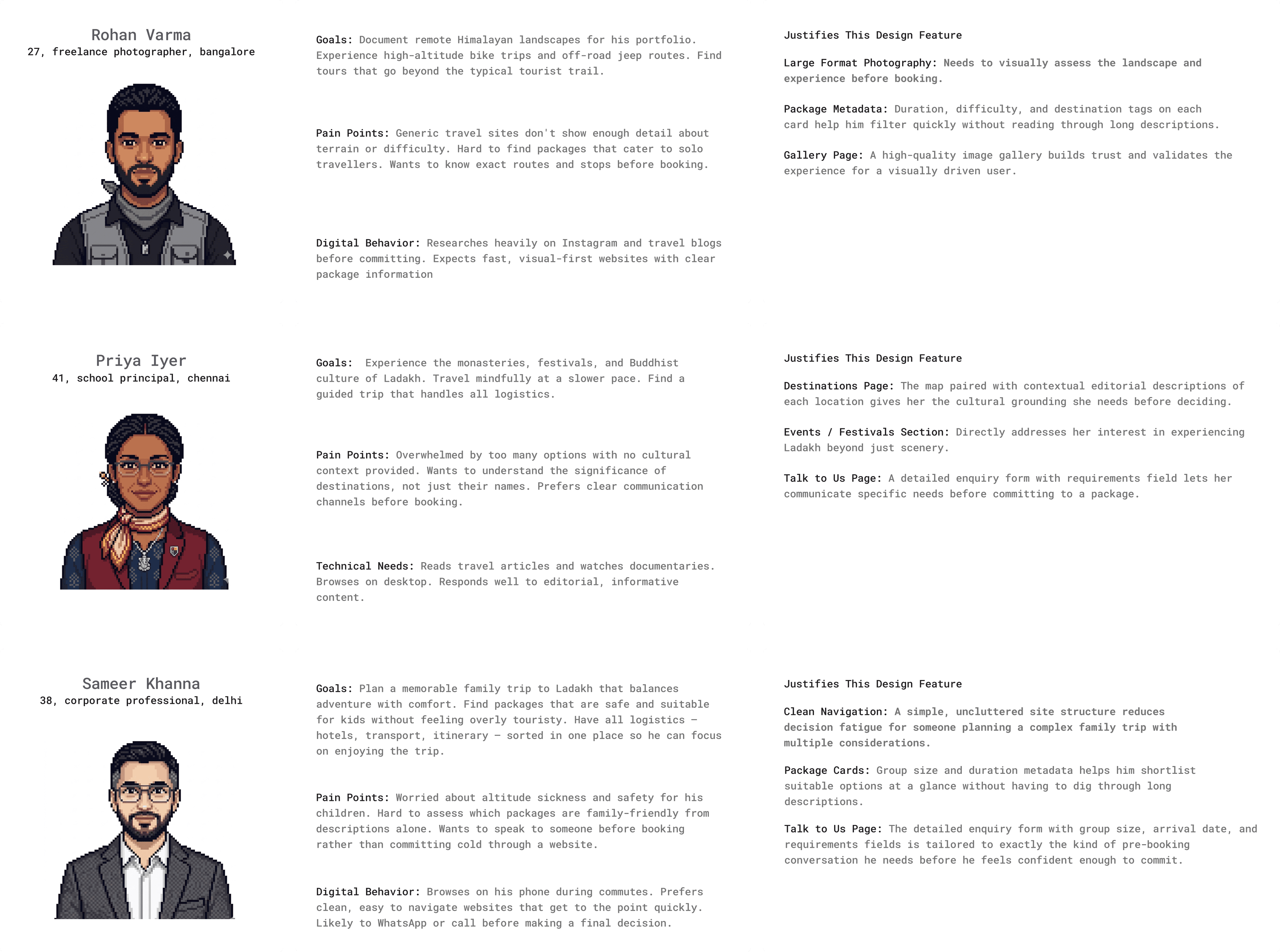
user personas
design direction
Before touching any individual page, I wanted a clear point of view for the redesign as a whole. Piecemeal fixes wouldn't address the underlying problem — the site needed a consistent visual language and a sense of what it was trying to make users feel.
The central idea was simple: Ladakh is the product. The website's job is to get out of its way.
That meant committing to something editorial and restrained — photography given room to breathe, an interface quiet enough that the landscapes do the heavy lifting. The red and white template aesthetic was set aside for something that felt more like a travel publication than a booking portal.
Typographically, the wordmark became a design element in its own right. A tight type hierarchy meant users always knew what to read first. Whitespace was treated as an active decision, not leftover space. Copy was written to sell a feeling before selling a package.
Every page was asking the same quiet question: does this feel like Ladakh?
landing page
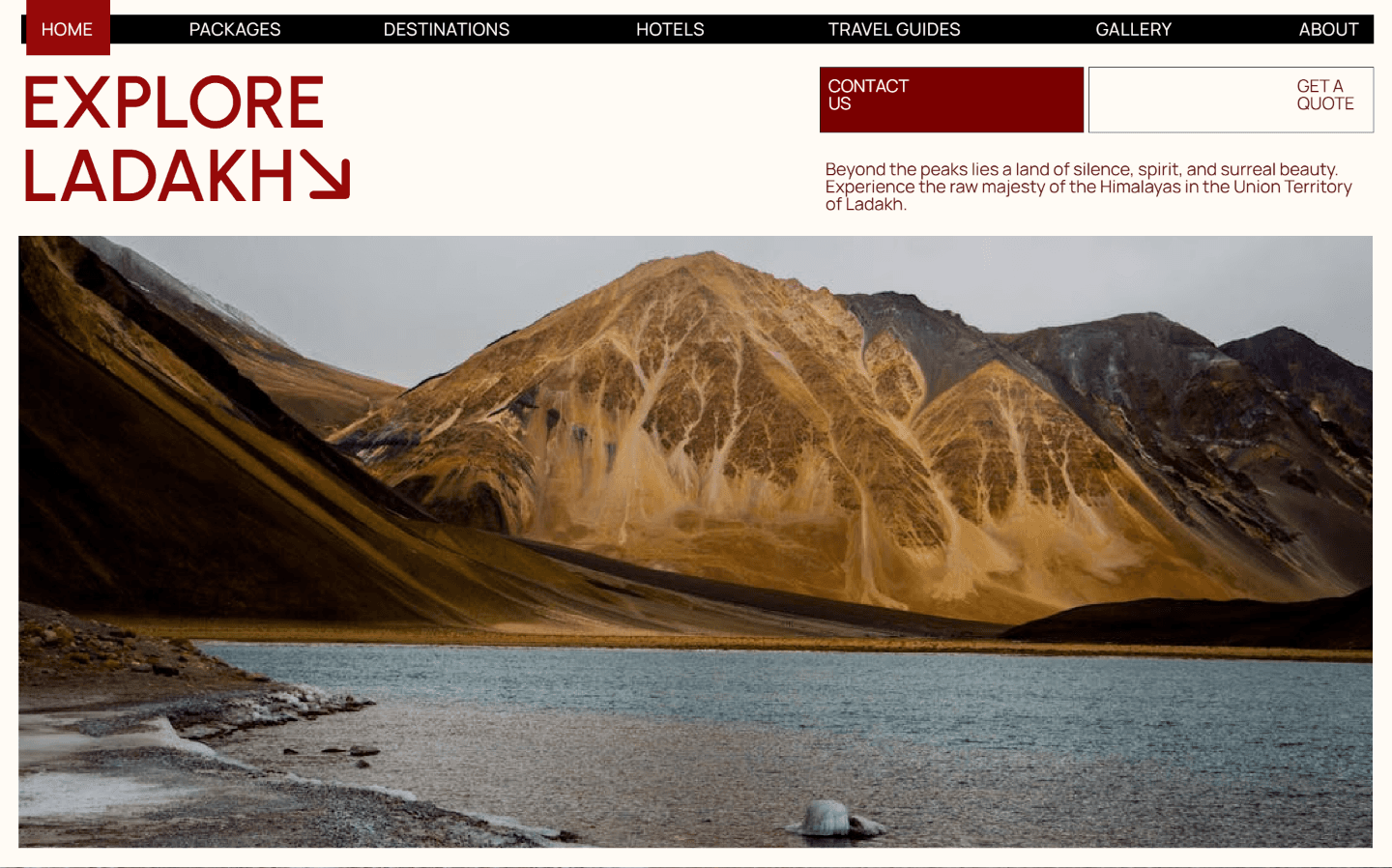
Two stacked headers consolidated into one clean nav. The fragmented image strip replaced with a single full-bleed hero. Wordmark scaled to editorial proportions, tagline kept short — an invitation, not a service listing.
destinations
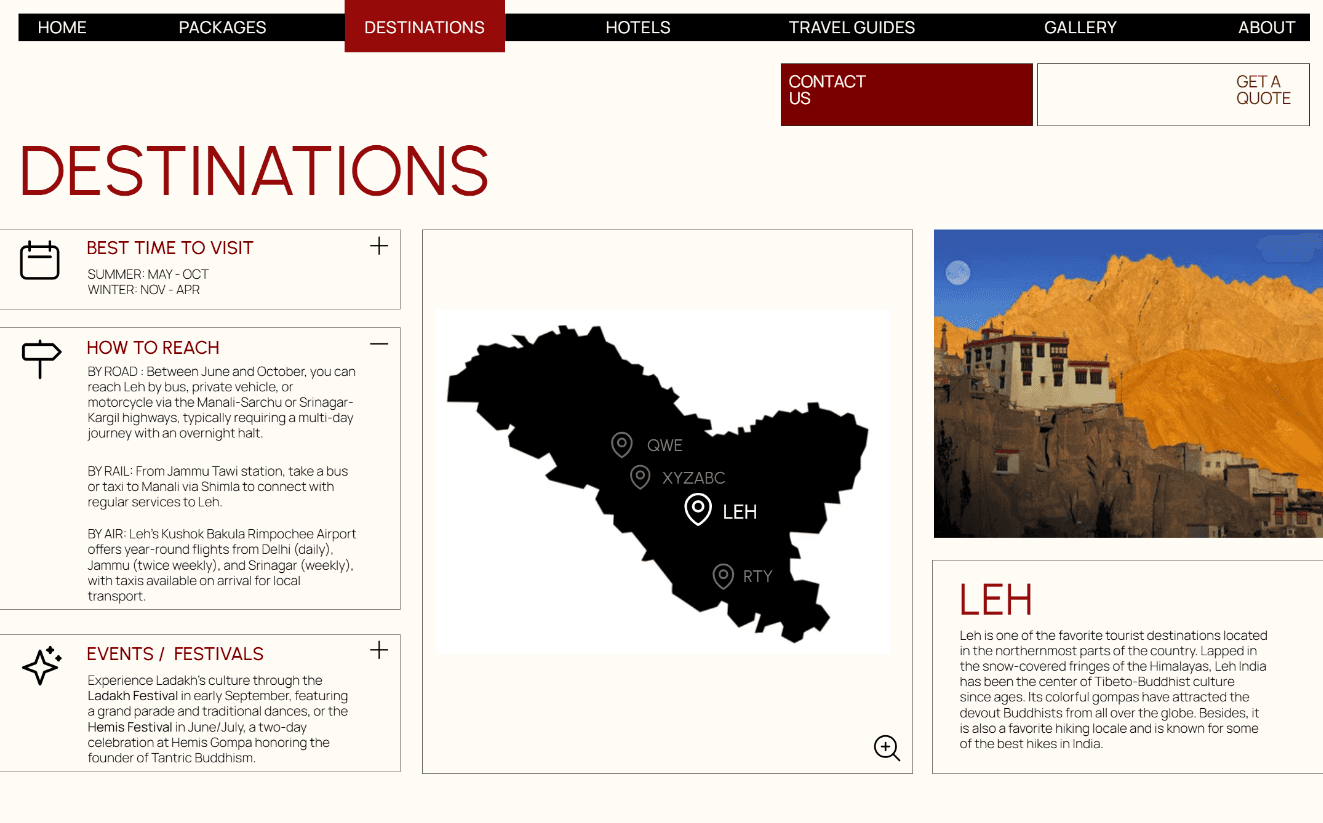
A flat list of place names replaced with an interactive map giving users a spatial feel for the region upfront. Selecting a location reveals an editorial description alongside a large image. Navigation designed to feel like discovery rather than browsing a directory.
packages
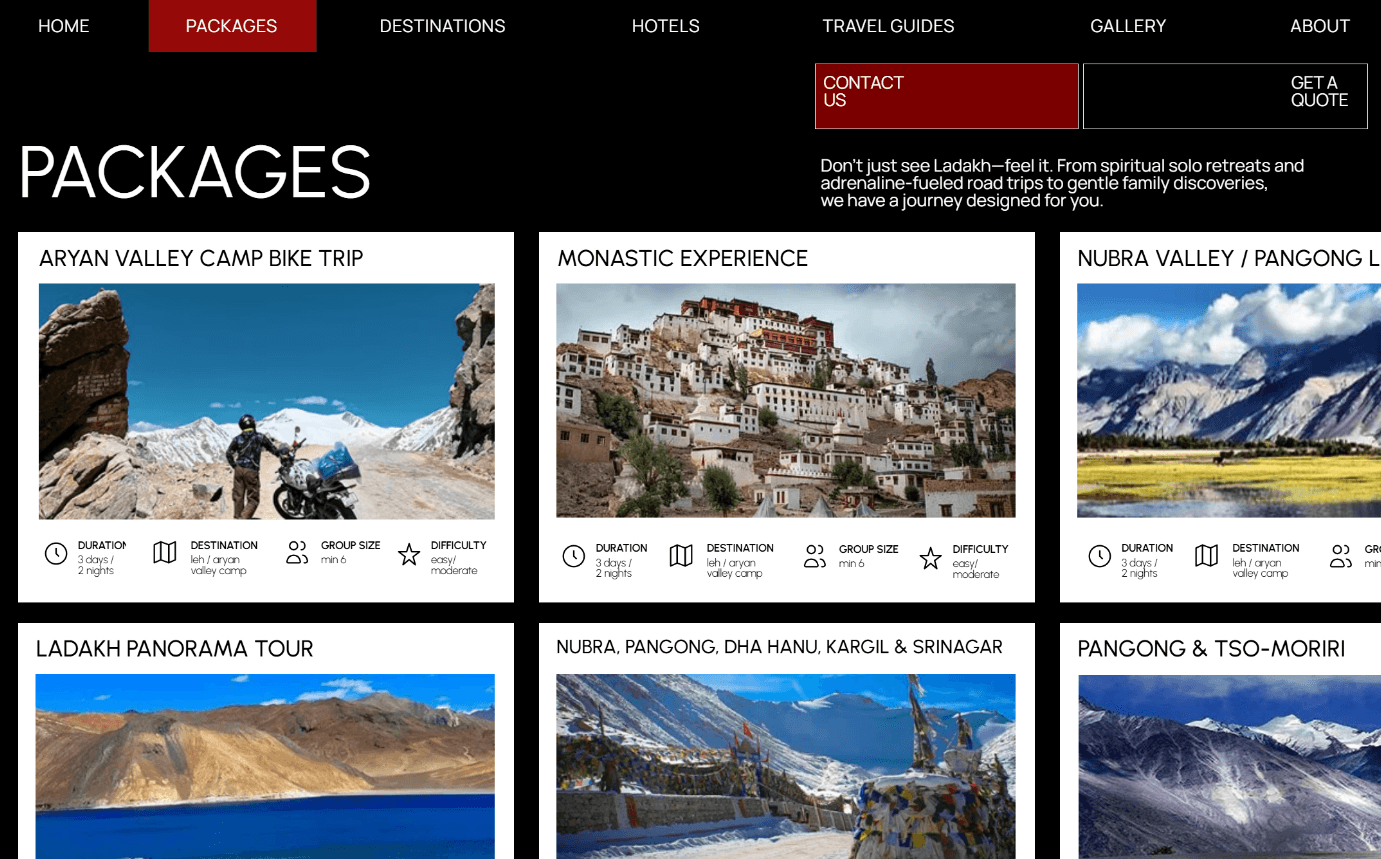
Identical list items replaced with editorial cards leading with large photography. Structured metadata — duration, destination, group size, difficulty — lets users assess at a glance without reading through descriptions.
gallery
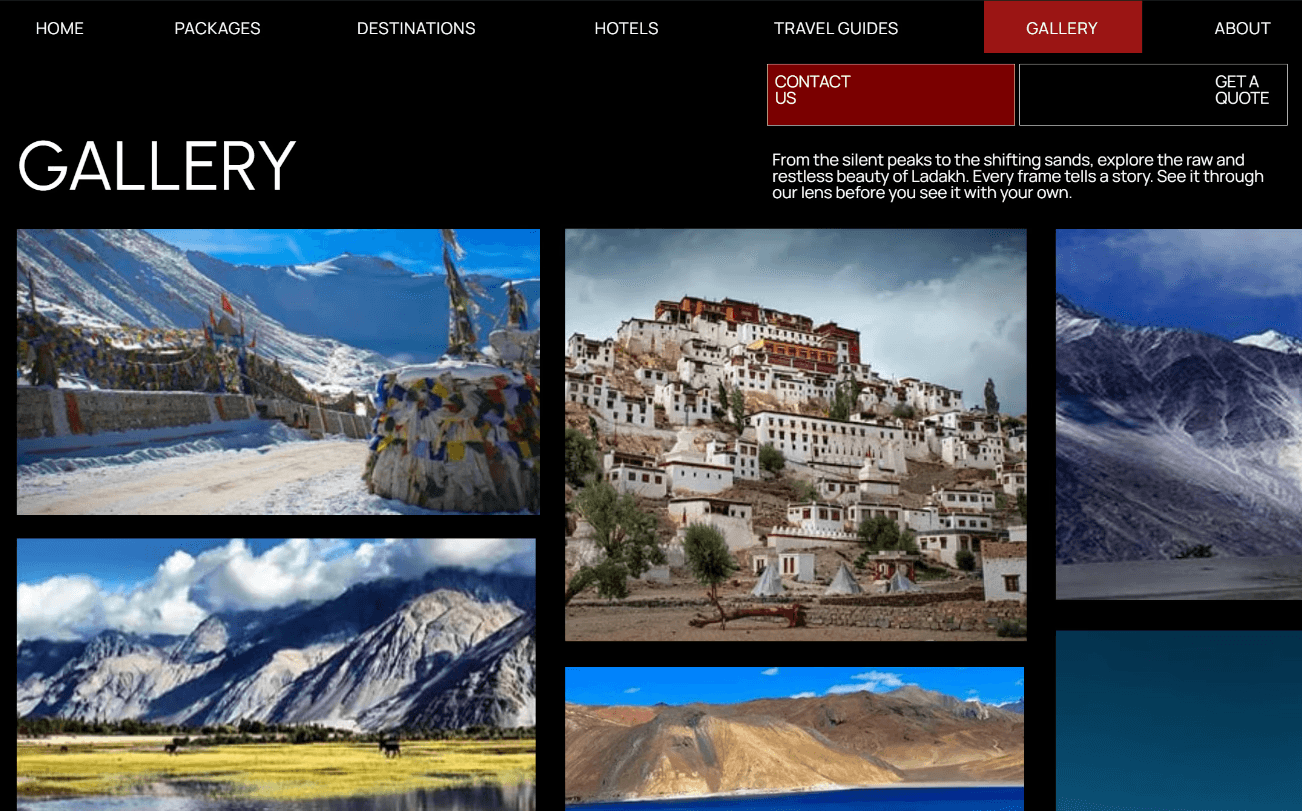
Images were previously scattered and inconsistently sized. Redesigned as a full-bleed editorial grid — photography treated as the primary content, not decoration supporting text.
contact
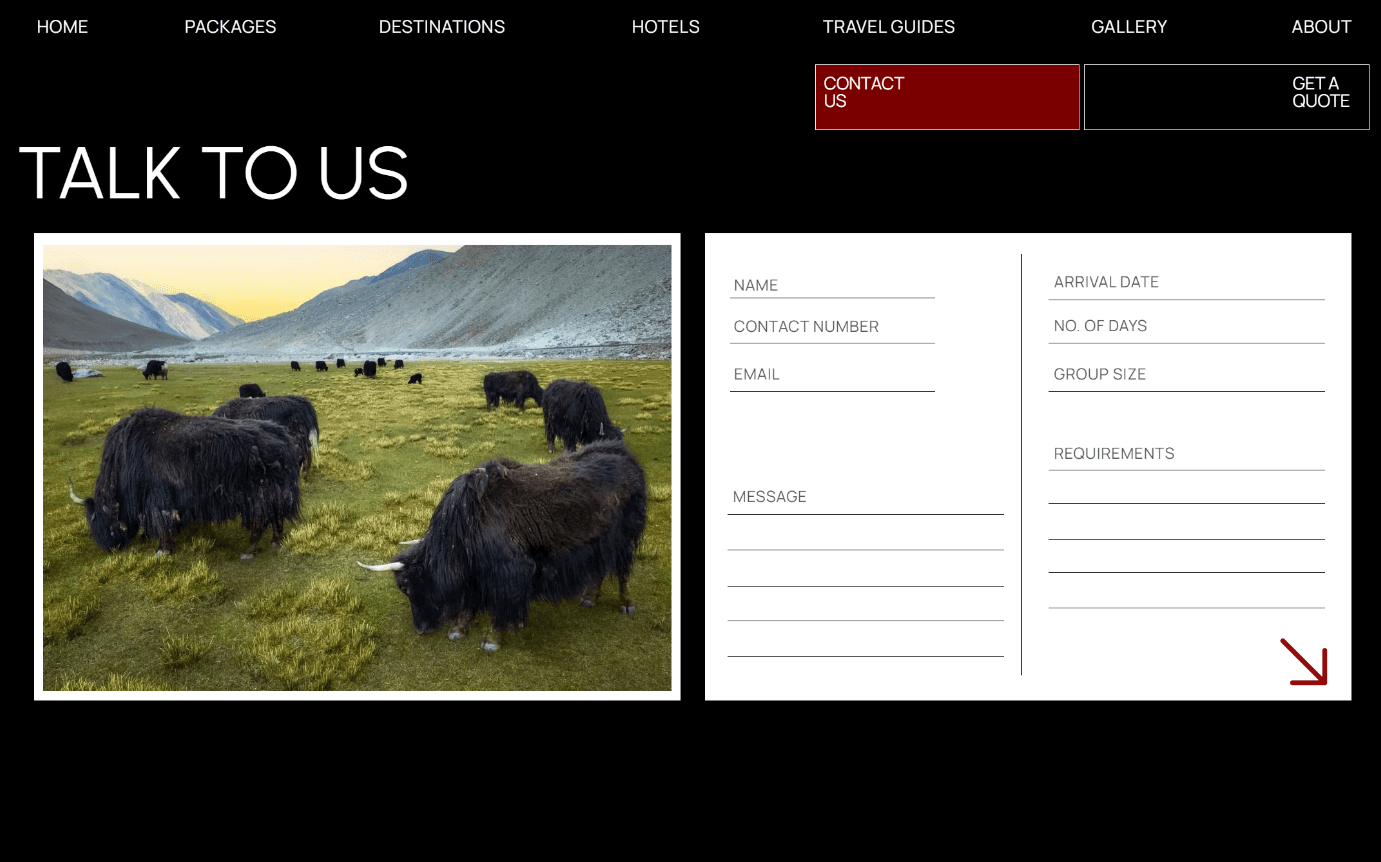
Renamed "Talk to Us" — a small shift that moves the tone from administrative to conversational. A large landscape image gives the page warmth. The form was expanded to capture arrival date, duration, group size, and requirements, turning first contact into a lightweight planning conversation.
footer
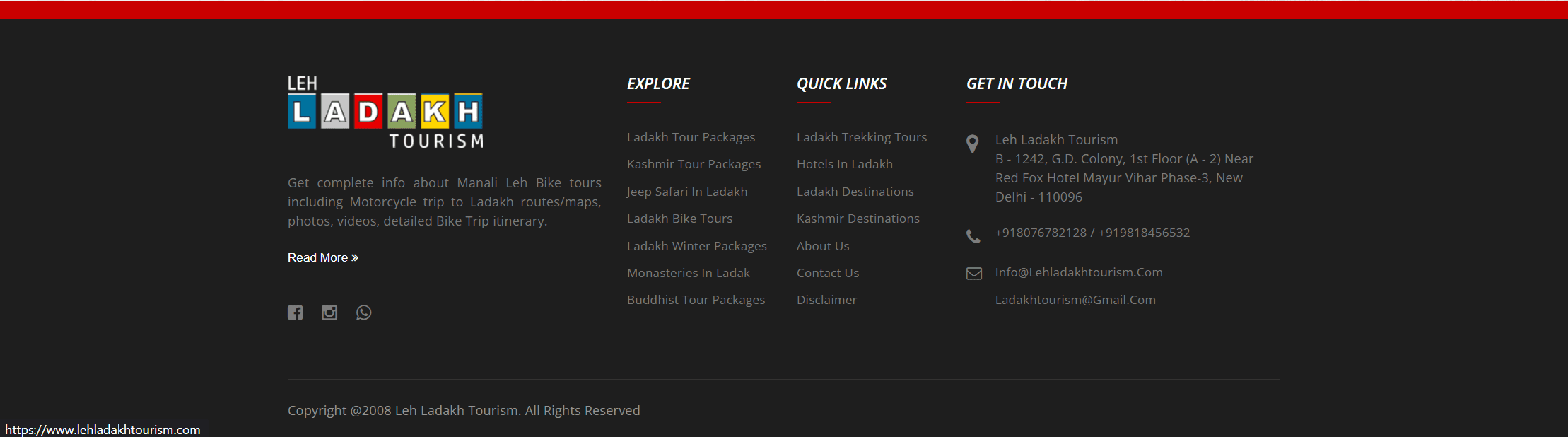
The original footer buried the brand — small logo, dense columns, dark background competing with everything above it.
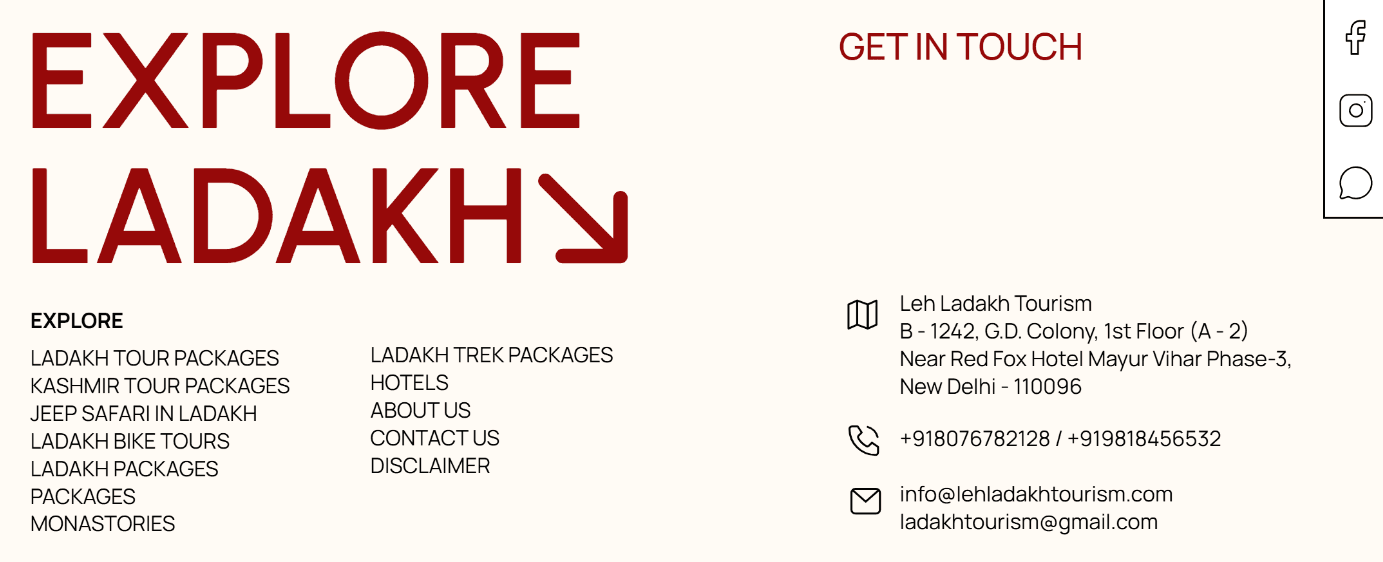
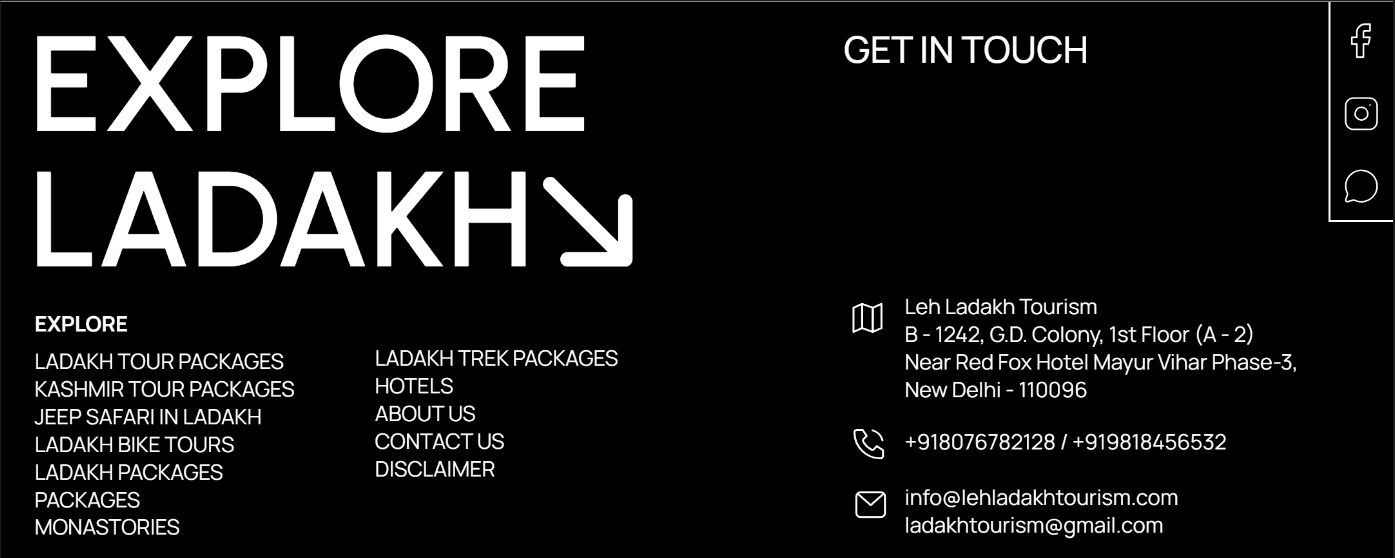
The redesign makes the wordmark the dominant element — large, confident, owning the space. Navigation and contact details sit in a clean two-column structure beneath it. Two versions: light for most pages, dark for contrast where needed.
The footer became the last thing you see. It should feel like the brand, not an afterthought.
what i'd do next
Working on Explore Ladakh clarified something that now sits at the centre of how I approach design: a product can be fully functional and still fall short if it doesn't connect with the person using it. The gap between a site that works and a site that resonates is almost always a design decision.
Metrics I'd track:
— Scroll depth on the landing page
— Time spent on Destinations page
— Enquiry form completion rate
— Return visit rate (a signal that the site is being used as a planning resource)
Usability testing priorities:
This was a self-initiated redesign without access to real user data, which means the most important next step is validation. Here's what I'd test:
The hero — does a single full-bleed cinematic image actually increase time-on-page and scroll depth compared to the original fragmented strip? I'd run an A/B test to find out.
The destinations map — does the interactive map aid discovery, or does it add cognitive load for users who just want to browse a list? I'd run moderated sessions with travellers matching each persona profile to answer this.
The enquiry form — does expanding the form into a planning conversation increase submission rates, or does the added length create drop-off? Completion rate and drop-off point data would tell that story quickly.
-
a
a
y
n
a
n