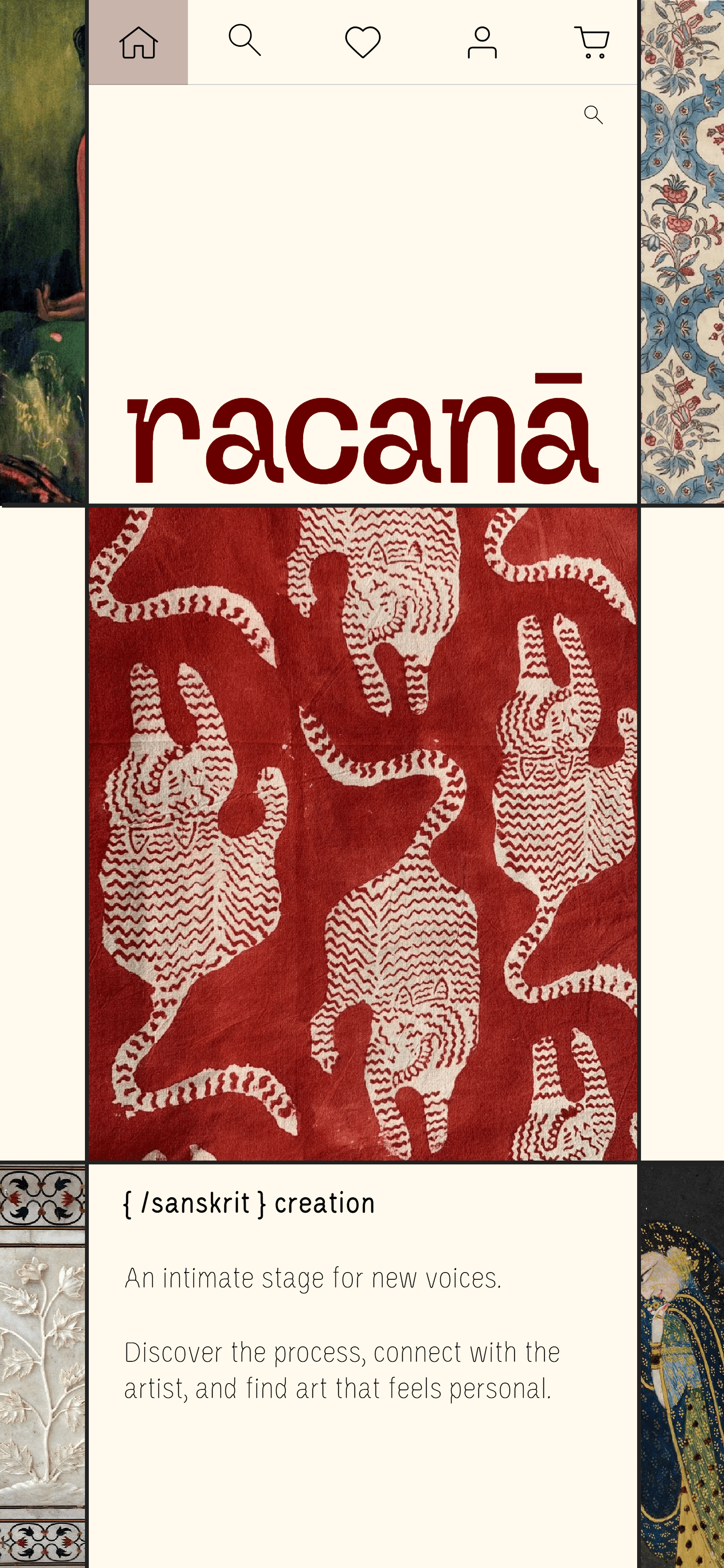
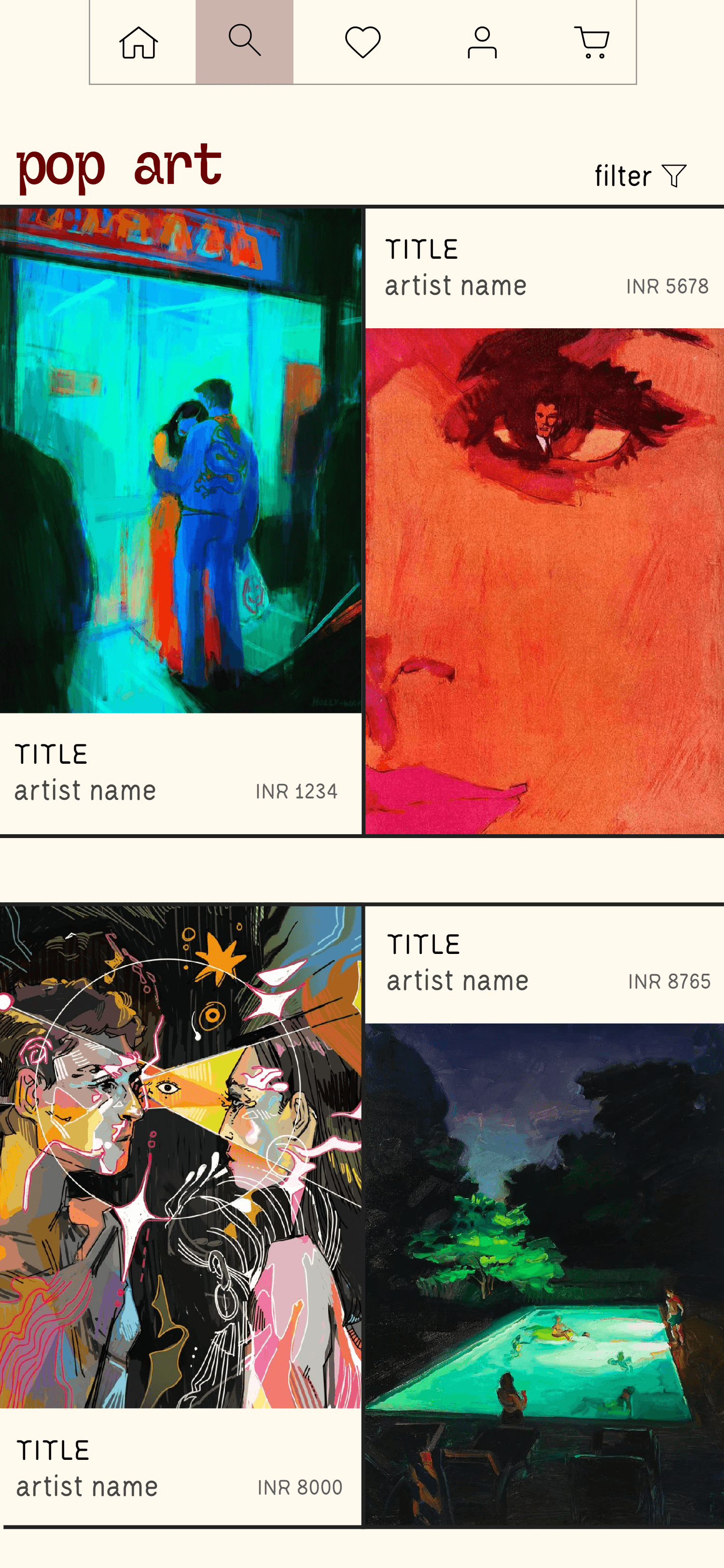
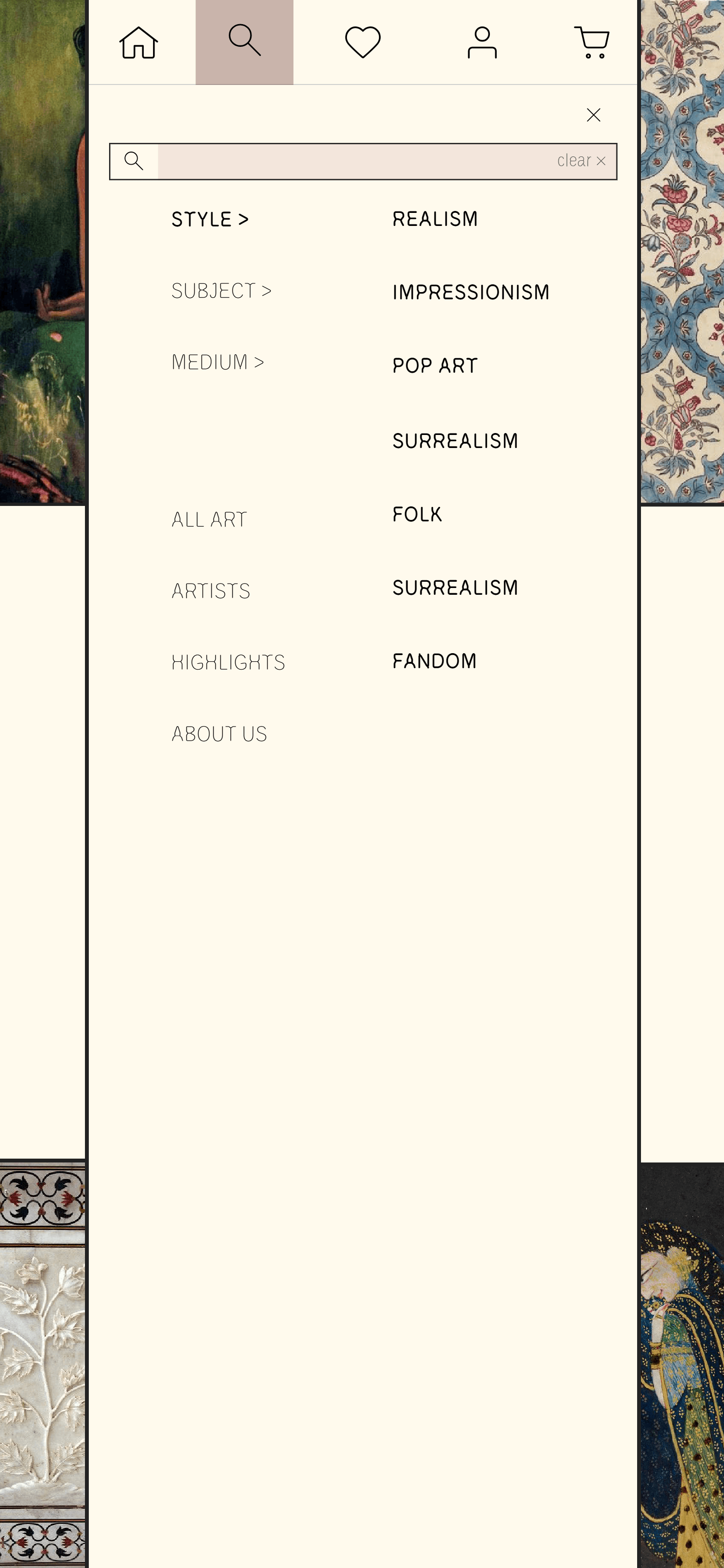
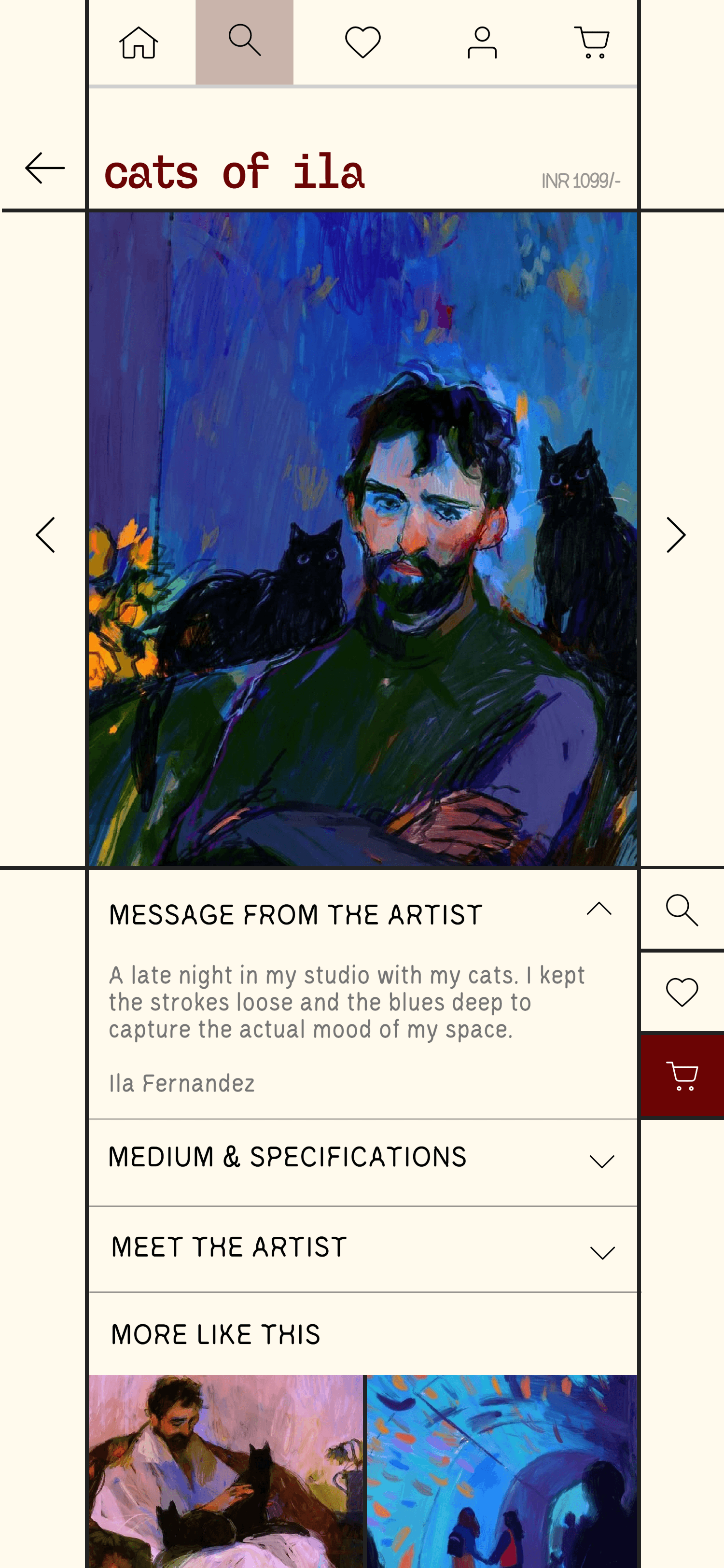
A curated marketplace for handmade work by Indian artists — designed for collectors who buy with intention.
Platform: Mobile App
Type: End-to-end concept project
03 Racanā
Collectors and buyers of handmade Indian craft need a way to verify the authenticity, quality, and story behind a piece — because without that trust layer, high-intent buyers disengage and skilled makers can't command the value their work deserves.
problem statement
process overview
Racanā was designed following the Design Thinking framework, applying Google UX methodology— starting from understanding the people this platform needed to serve, before touching a single screen.

research + Insights
Without direct user interviews at this stage, I grounded the design in secondary research across the handmade ecommerce landscape — studying platforms like Etsy, Amazon Handmade, and India-specific players like Jaypore and Tjori to understand where the experience breaks down.
Three patterns emerged consistently:
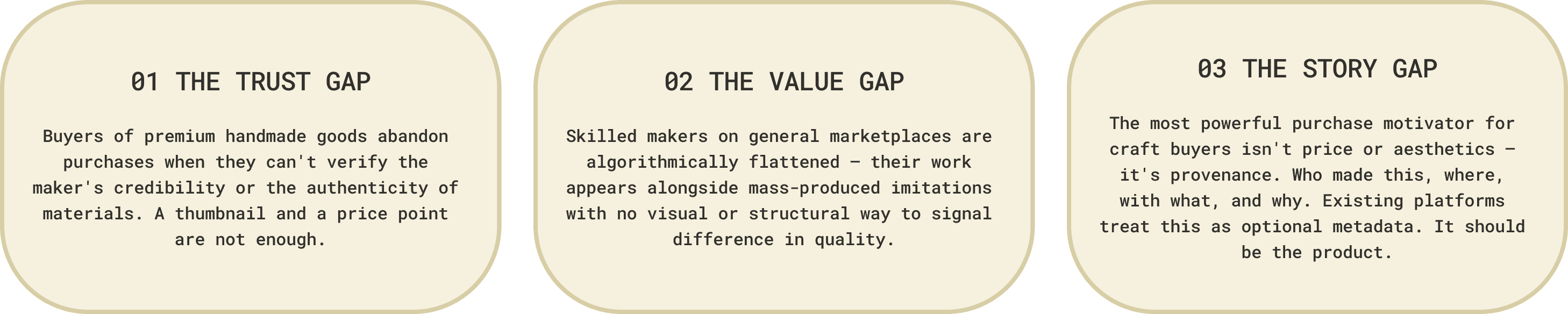
These weren't abstract market problems. They belonged to specific people. So before designing anything, I needed to know exactly who.
user personas
/ from pattern to person
Every insight from the research mapped onto a real type of user. I built two personas to make sure the design never lost sight of who it was actually for.
Natasha Menon, 32, Senior Product Manager, Mumbai represents the discerning buyer. She shops with intent, researches before purchasing, and expects the same visual and functional polish from an art marketplace that she gets from any well-designed consumer product. Her pain point with existing platforms is the gap between what something looks like in a thumbnail and what it actually is as an object. For Natasha, trust is built through detail, and detail has to be designed in.
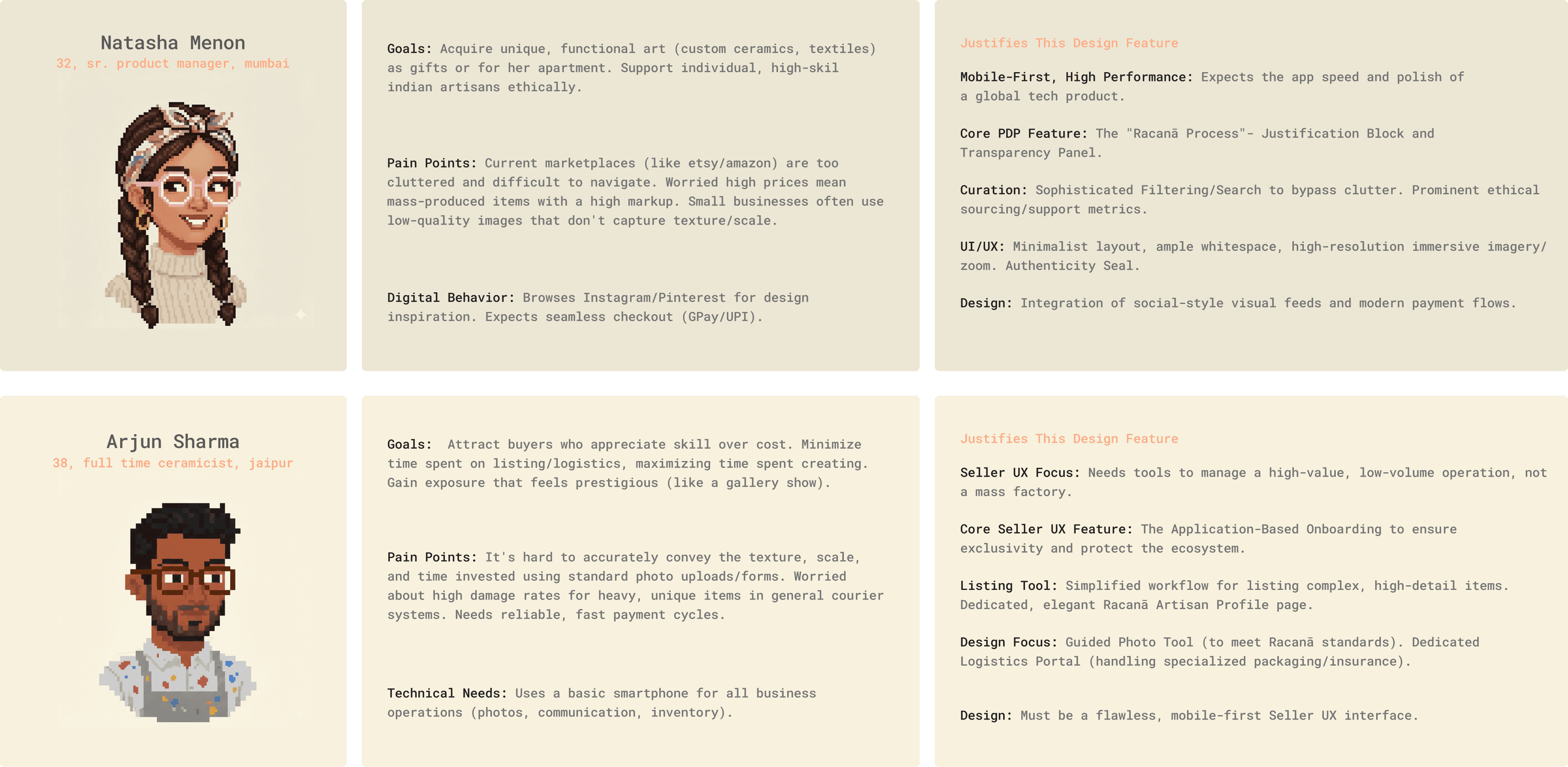
Arjun Sharma, 38, Full-time Ceramicist, Jaipur represents the maker. He operates a high-skill, low-volume practice and needs tools that reflect that reality. His concerns are practical: conveying texture and scale accurately, managing fragile logistics, and maintaining the perception of quality that his work deserves. For Arjun, the platform needs to feel like a gallery, not a warehouse.
Every feature in the product can be traced back to one of these two people. The personas kept the design honest.
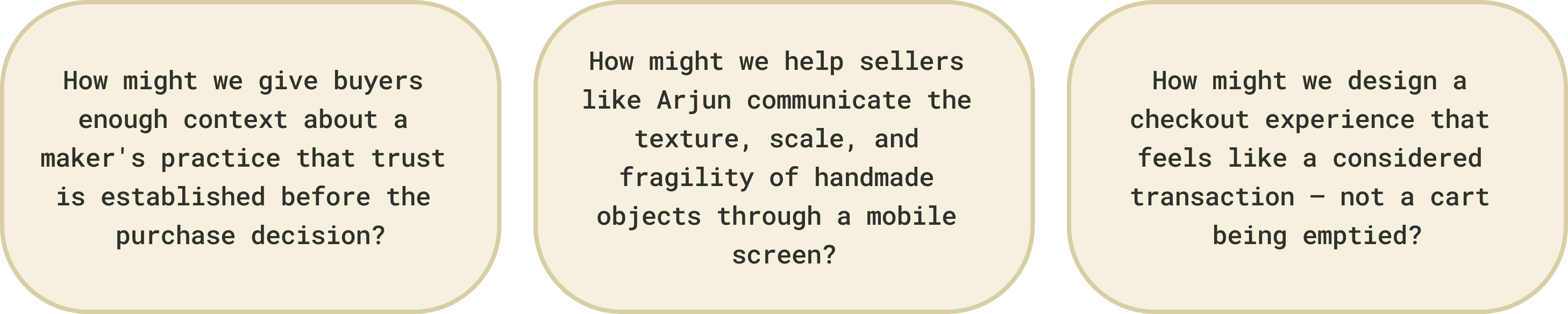
how might we
B-UX/ the buyer flow
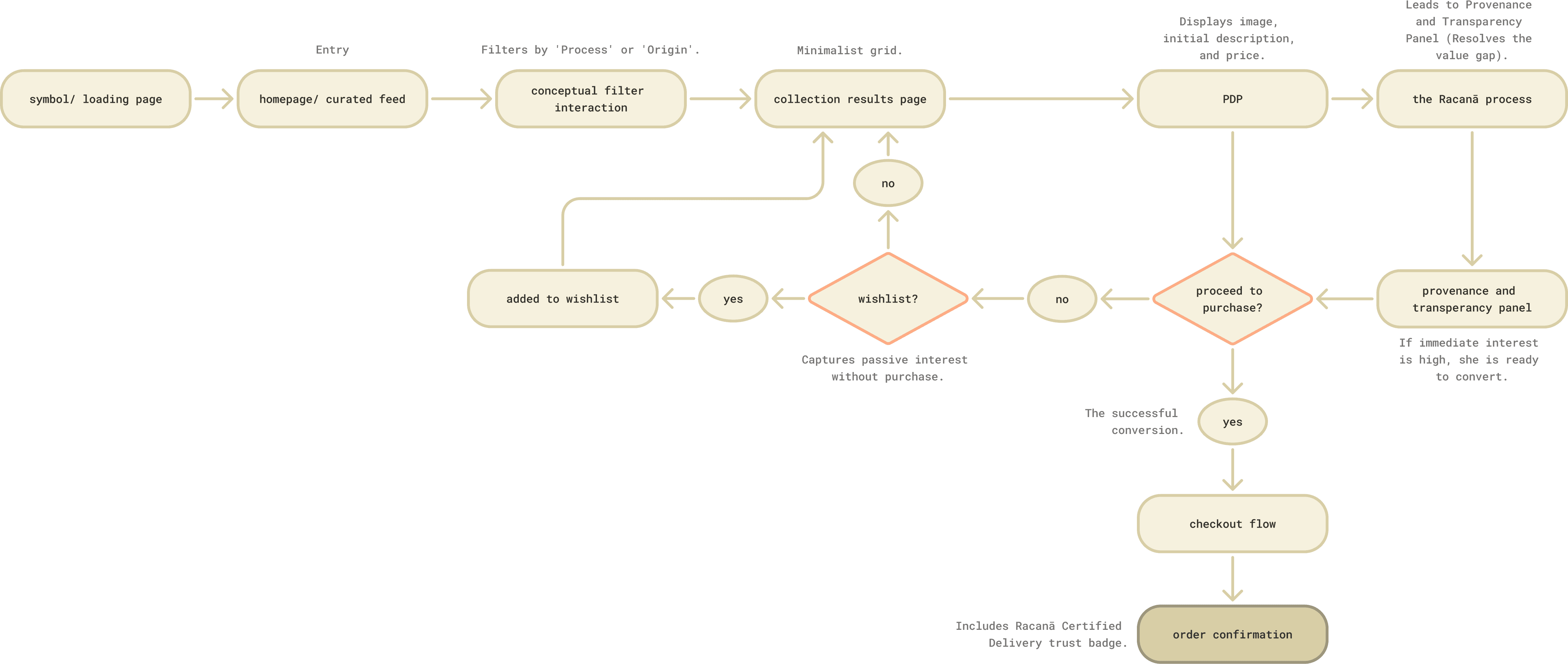
Standard e-commerce moves from discovery straight to purchase. For handmade art, that skips the most important step: understanding what you're actually buying.
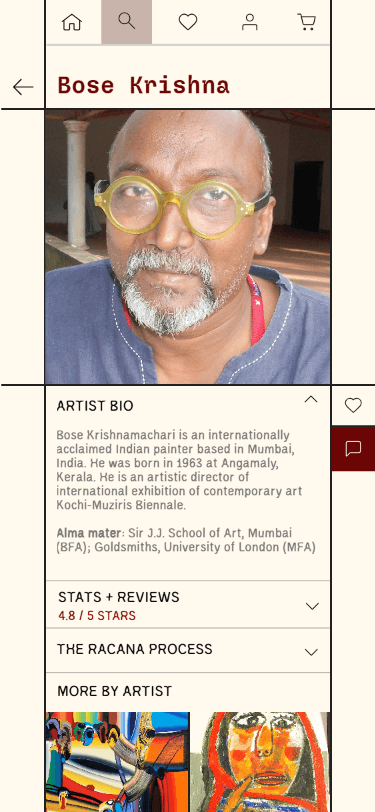
I introduced a Provenance and Transparency Panel between the product detail page and the purchase decision — deliberately placed so that by the time Natasha is ready to commit, she's already read the story, understood the materials, and seen the artist's practice documented. The value gap is closed before she has to decide.
user flows
S-UX/ the seller flow
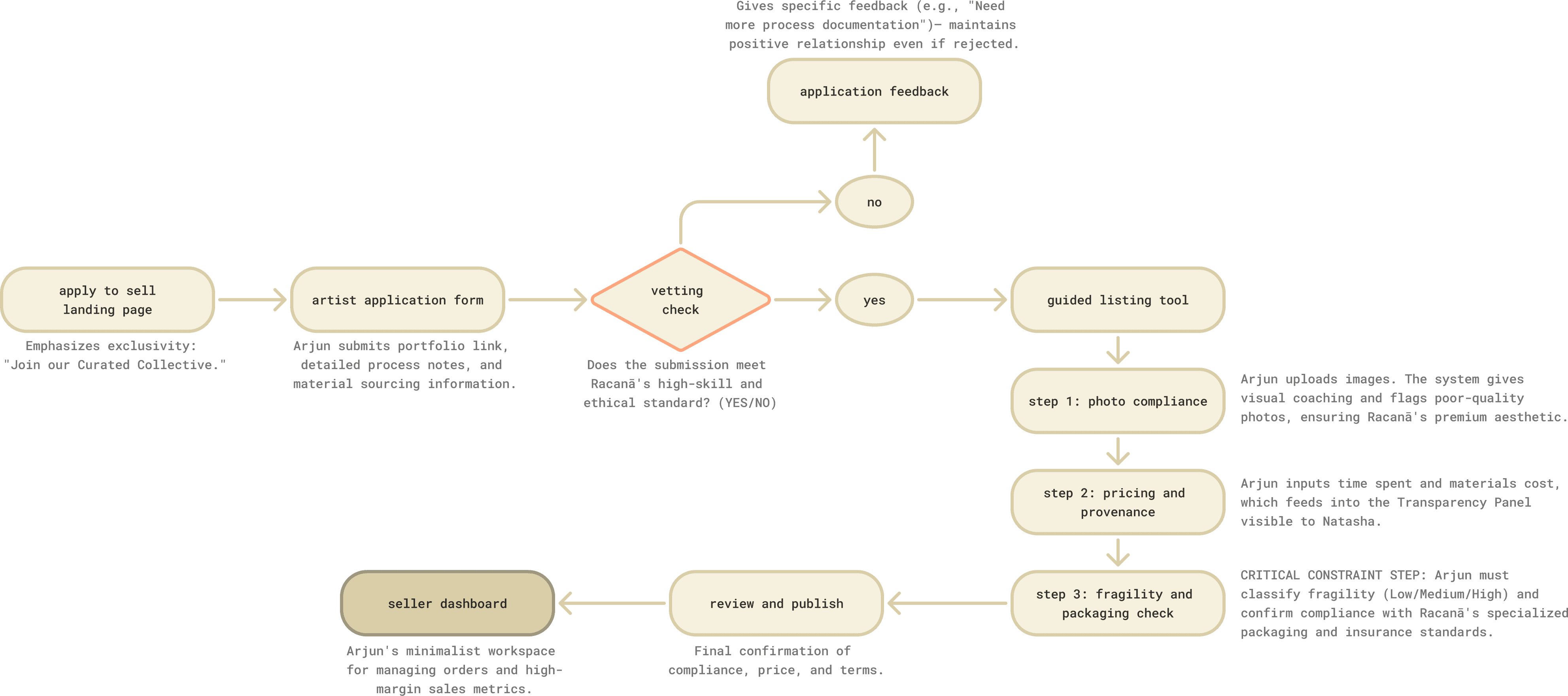
Arjun's biggest operational risk is what happens after a sale. Handmade ceramics are fragile and frequently mishandled in standard courier systems. One shipping dispute can damage both the transaction and the brand.
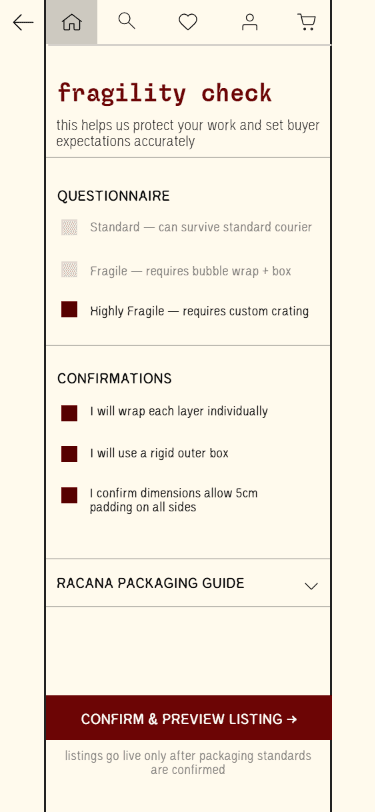
Rather than leaving packaging to individual judgment, I built a mandatory Fragility and Packaging Check into the listing tool itself — Arjun classifies fragility, confirms compliance with Racanā's standards, and only then can a listing go live. Quality control built into the workflow, not enforced after the fact.
sitemap
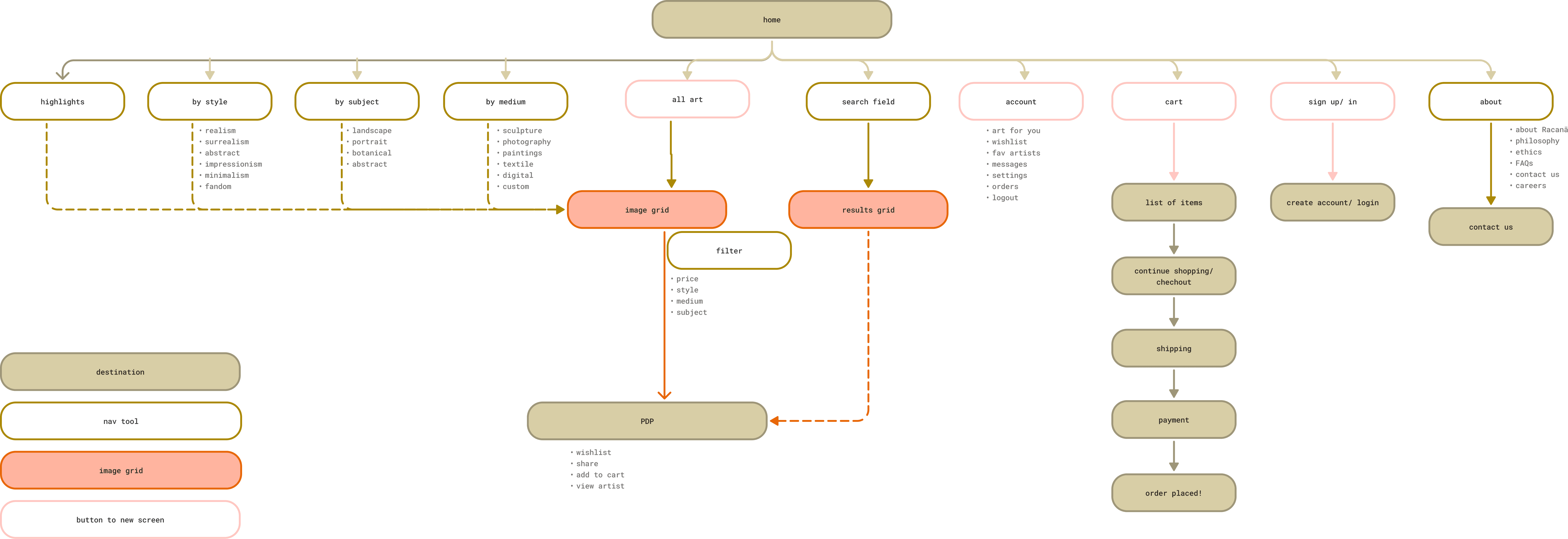
Filters by Style, Medium, and Subject get Natasha to work she'll actually want. Every path converges on the Product Detail Page, where artist provenance takes centre stage. The cart and checkout was kept deliberately lean — by the time a user reaches it, trust has already been established upstream.
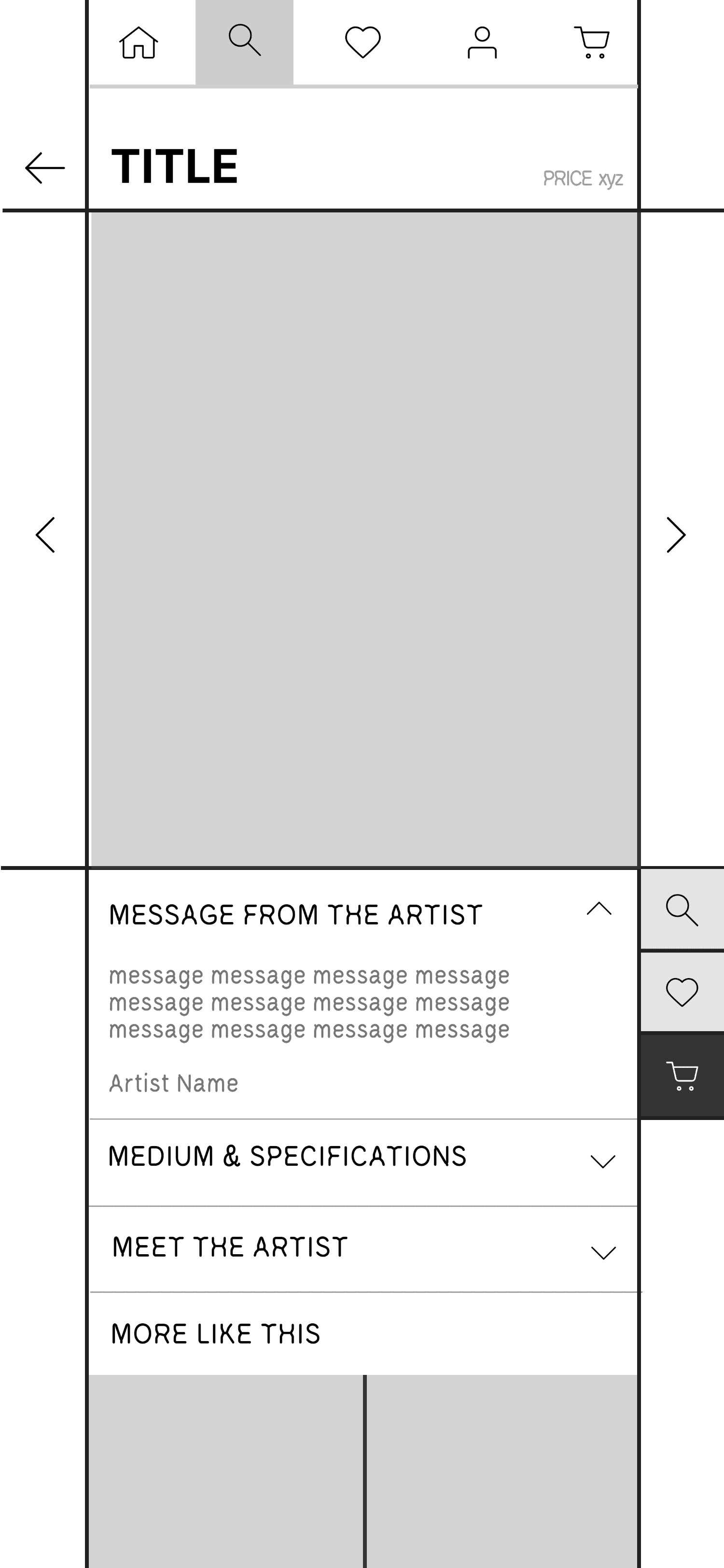
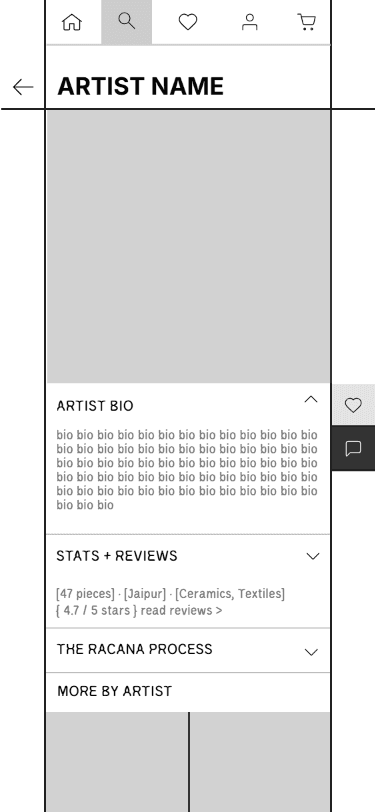
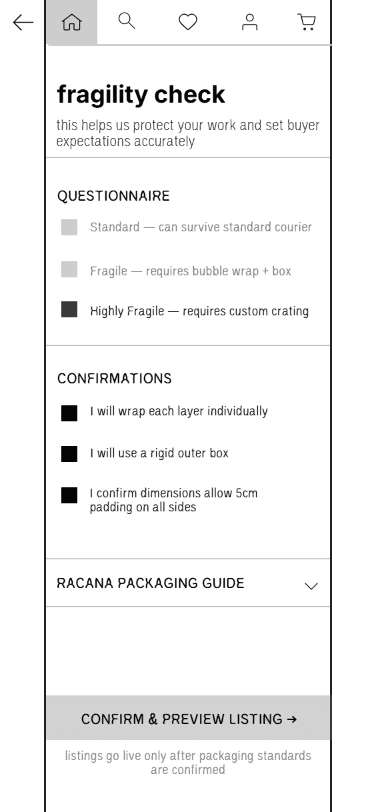
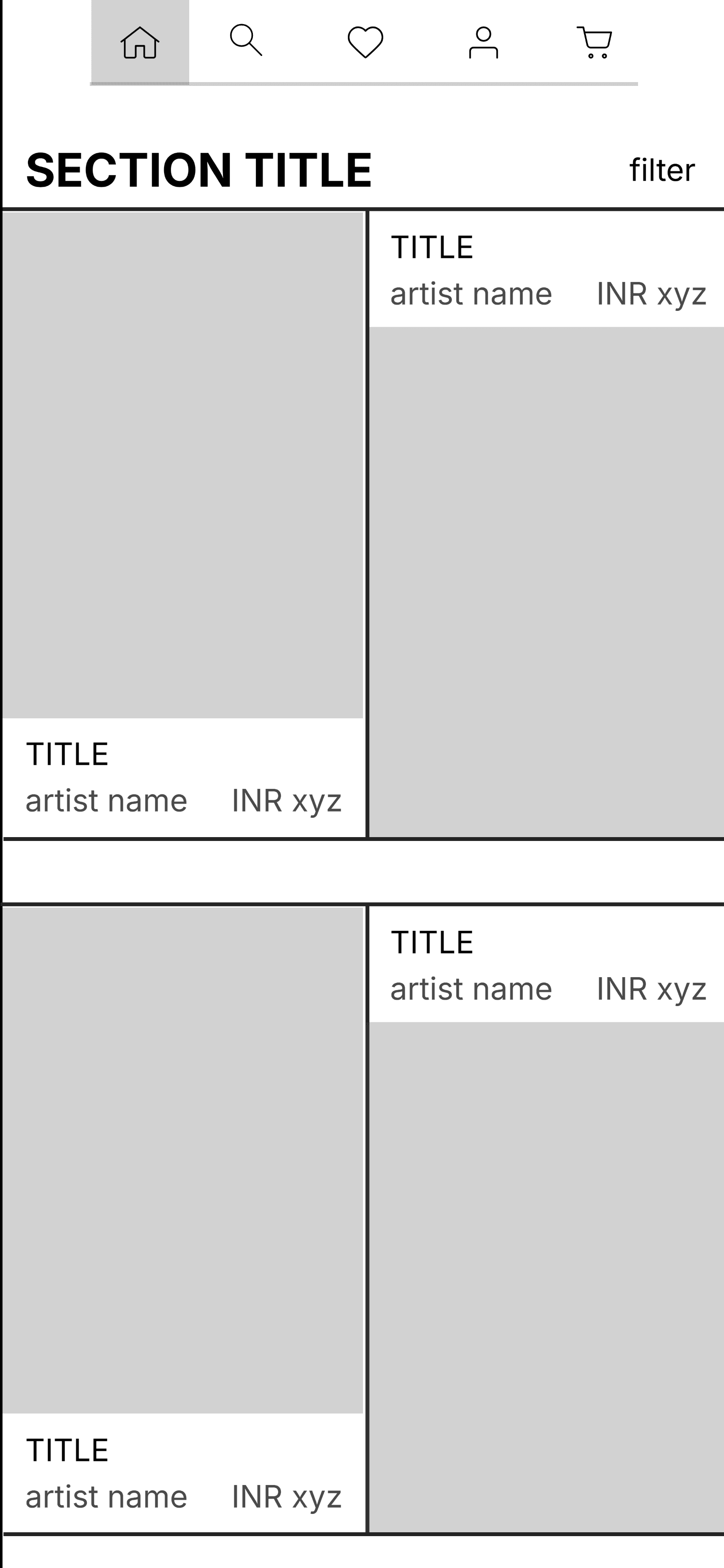
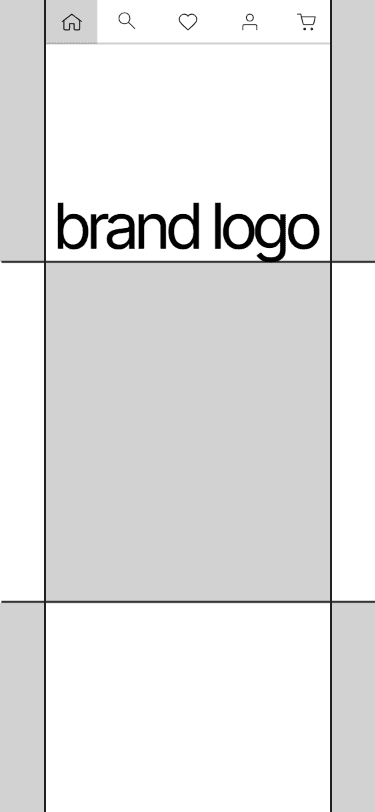
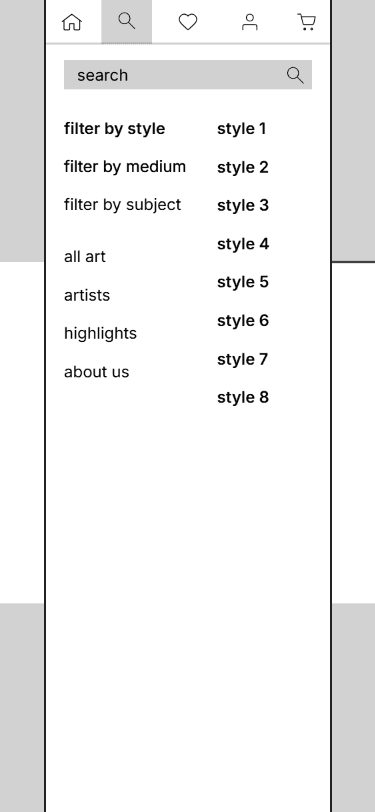
Less about laying out screens, more about pressure-testing logic before committing to visual decisions. The core question: does the journey from discovering a piece to understanding its maker feel genuinely effortless? The visual design came after that foundation was solid.
wire-framing
product design
what i'd do next
Racanā is a concept project, and the honest next step is validation. Here's what I'd test and measure:
Metrics I'd track:
— Add-to-cart → purchase conversion rate
— Time spent on Provenance Panel
— Seller listing completion rate
— Return rate (a trust signal if low)
Usability testing priorities:
The Provenance Panel - does it actually close the trust gap for buyers, or does it create friction in the purchase flow? I'd run moderated sessions with buyers matching Natasha's profile to find out.
The Fragility & Packaging Check in the seller flow - sellers need to complete this before listing goes live. I'd test whether this feels like quality control or bureaucracy.
Product Design
____________
-
a
a
y
n
a
n